
 EN
EN



How Mist Fans Improve Comfort on Outdoor Patios
Science of Mist Fans: Why and How Evaporation is an Effective Outdoor Temperature Reducer
Evaporative cooling reduces air temperature through the process of converting liquid water to vapor. This process requires energy and absorbs heat from the air, about 970 BTUs per pound of water. High-pressure mist fans excel at outdoor temperature reduction because they create ultra-fine droplets (5 to 10 microns) that vaporize almost instantaneously. This causes an immediate cooling effect as the air loses thermal energy, and it can do so without wetting surfaces. The principle is much like the effects of perspiration: as sweat evaporates it cools the skin due to the absorption of latent heat. In a similar way, optimized mist systems use this natural thermodynamic process. The cooling power of the mist is heavily dependent on droplet size. Particles larger than 15 microns will partially evaporate, which will actually reduce their cooling power and increase dampness on the surface.
Factor Optimal Performance Suboptimal Conditions
Droplet Size 5–10 microns >15 microns
Evaporation Speed Near-instantaneous Slow, incomplete evaporation
Cooling Efficiency Maximum heat absorption Reduced thermal transfer
Surface Moisture Minimal residue Noticeable dampness
Climate-Specific Performance: 15–30°F Drop in Dry Heat vs. Limited Gains in Humidity
The technology of mist fans was impressively straightforward. The mist fans had a in arid/dry heat environments; whenever dry air flowed through the mist fans and remained actively in motion, the dry air rolled through water vapor and was able to reduce the system temperature at all the exit points of the dry air mist fan. The average temperature reduction was around 15–30°F. It was a mind altering experience, and transformed the sweltering hot, stagnant air in a patio or outdoor environment, into a cool environment, providing great comfort in a matter of minutes. Conversely, being in a humid environment in arid heat, where relative air humidity was above 60%, a mist system had little to no effect in the process of evaporating water. Moisture-saturated air masses remained at points of dry air motion near the exit orifice of the mist system. The temperature reduction in this case was typically less than 10°F. This effect was a result of different vapor pressure. In a humid environment relative pressure was saturated and the environment sustained near equilibrium conditions, whereas in an arid environment all conditions had steep dry pressure. The conditions of zone 1 took moisture evaporating at an increased rate from the dry air zone. Zones 1 to 2 had near equilibrium and therefore stagnant conditions to resist the evaporation of moisture; this was the result of different vapor pressure conditions. In zones of high pressure, such as 1000–1500 PSI, the moisture droplets were dispersed rapidly, which increased the effectiveness of the system in arid conditions; placement of the system and where the dominant high pressure droplet is dispersed was key to effective and efficient operational performance, whereas the use of high pressure system and wider spray nozzles had little to no effect, and were used as a waste of water.
How to Size Your Mist Fan to Your Patio Area
Once you have determined how you want mist fans, sizing patrons fans properly allows for the most effective method for cooling a patio fan system, while not being wasteful on energy or water usage. Start with determining the size of your patio area in square footage, but consider the height of the ceiling, obstructions like furniture and plants, and open sides where air could be escaping the area and the mist fan system. The air from the mist fan system will be cooled and travel downwards to the people seated in the space. If there are obstructions like walls or dividers, this will cause the mist cooling system to be fragmented and multiple smaller mist fan systems are preferred rather than one large system. Below you will find the recommended size of the mist system based on standard size patios:
Size of patio area Water pump capacity (in gallons per minute) Number of nozzles Recommended sizing adjustments
Small patio (less than 400 sq. ft) 0.125 to 0.5 4 to 25 Recommended for small, intimate seating areas
Medium sized patio (400 to 800 sq. ft) 0.5 to 1.0 25 to 50 Nozzles should be added to open edges
Large patio (greater than 800 sq. ft) 1.0+ 50 and more Recommended use of oscillating fans for an even more effective mist system distribution.
When sizing patio areas that have more irregular layouts, keep in mind where there are open paths for unobstructed airflow. Mist fan systems that are not properly sized may be wasteful in water usage and not effective in improving comfort, so size things properly. When there are more complex issues in space design, you should rely on your manufacturer design specifications or consider consulting with an outdoor cooling certified specialist.
Designed for the Elements: Weather Resistance, Safety, and Long-Lasting Durability
IP Rated Housings, Rust Proof, and GFCI Compliant for Outdoor Safety
Patio mist fans experience rain, UV exposure, and temperatures of varying degrees while needing to maintain electrical safety. Units with an enclosure rating of IP65 or higher are protected from greats amounts of dust and are watertight, helping ensure reliability even during summer storms. Marine-grade aluminum or 316L stainless-steel parts resist rusting from salt air, and UV-stabilized powder coatings prevent design degradation. Integrated GFCI (Ground Fault Circuit Interrupter) technology provides electrical safety by cutting the power to the device within milliseconds if an electrical current imbalance is detected, critical when water is introduced to live components. According to the Consumer Product Safety Commission (2023), GFCI protection will reduce shock incidents by 93% compared to unprotected appliances.
The Balancing Act of Nozzle Longevity and Hard Water in Mist Fan Systems
Hard water is brutal to nozzles and the misting system’s primary purpose — droplet formation. This often results in performance deteriorations within months. Advanced systems implement three essential techniques to combat this: anti-clog nozzles with calcium scale avoiding and titanium coatings, reverse-flushing automated sediment purges, and optional inline water filters that capture sediment exceeding 5 microns. In areas with exceptionally hard water (over 200 PPM), scale-inhibiting cartridges containing food-grade polyphosphates extending maintenance intervals by 60%. Independent testing validates that minimal maintenance (filter changes, vinegar rinses) preserves 90% functionality in nozzles over five years — ensuring reliable delivery of fine mist at peak temperatures during dry heat conditions.
Patio Comfort Strategies for Operational Placement
Adjustable Speeds, Oscillation, Portability, and Permanent Mounting
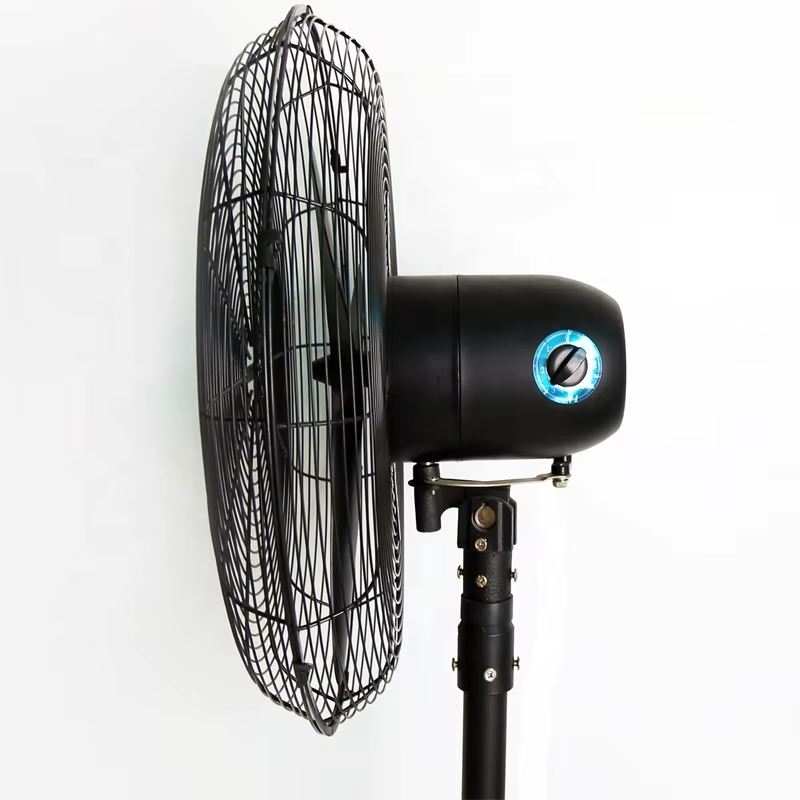
Custom operation and unit placement help optimize comfort and efficiency. Oscillation helps with even cooling and eliminates hot spots. Adjustable speeds allow for more personalized control when air velocity. For example, a gentle breeze may be suitable for dining, whilst a stronger airstream may be required for the heat of midday. In contrast, portable units may be used more flexibly, for seasonal reconfiguration, or for multi-zone use, but they are cumbersome and require a good stable base, with a non-tip design. Permanent units allow for a reliable installation in high use areas but are more costly and less flexible. Mounting height and angling should maximize surface water evaporative cooling. Units should not be directly mounted next to tables where the seating overspray may disrupt the meal. Keep an adequate distance from the unit to preserve the quality of the airstream, and provide a good lateral clearance. In more humid conditions, combine a faster air speed with intermittent misting.
FAQ
What is the basic principle that governs the operation of mist fans and evaporative cooling?
Evaporative cooling relies on the transformation of water from a liquid to vapor, an endothermic process that absorbs heat from the environment and cools the air. in the case of mist fans, an ultra-fine stream of water is provided that rapidly evaporates and cools the surrounding air without causing surface wetting.
How does a misting fan respond to variations in the climate?
In warm, dry conditions, the use of mist fans is unchallenged, with the adoption of cooling air speed providing a sustained temperature reduction while adequate rapid evaporation occurs. In contrast, mist fans are ineffective in humid, and saturated air environments where rapid evaporation is not occurring, and temperatures are optimizing minimally.
How do I determine the ideal mist fan size for my patio?
Provide consideration for your patio dimensions, height, and available space. Enclosed areas tend to be more suitable for a greater number of smaller units. Conversely, larger areas need a more powerful configuration to provide coverage.
How can I be sure my mist fan will last and is safe to use outdoors?
Choose fans that have materials that will not cause rust and come with an ingress protection rating. Make sure your fan comes with a Ground Fault Circuit Interrupter to protect you from electrical hazards when it is wet outside.
What kind of maintenance is required for mist fans in locations with hard waters?
Those in areas with hard water will require extensive maintenance. Instead of regular nozzles, use reverse-flush ones that come with a titanium coating. Use an inline filters to protect the fans and perform regular phone maintenance to keep things running smoothly. Quarterly, the fans will need to be rinsed with vinegar to maintain the nozzles and filters, and a consistent commitment to upkeep will protect the nozzles and performance.