
 EN
EN



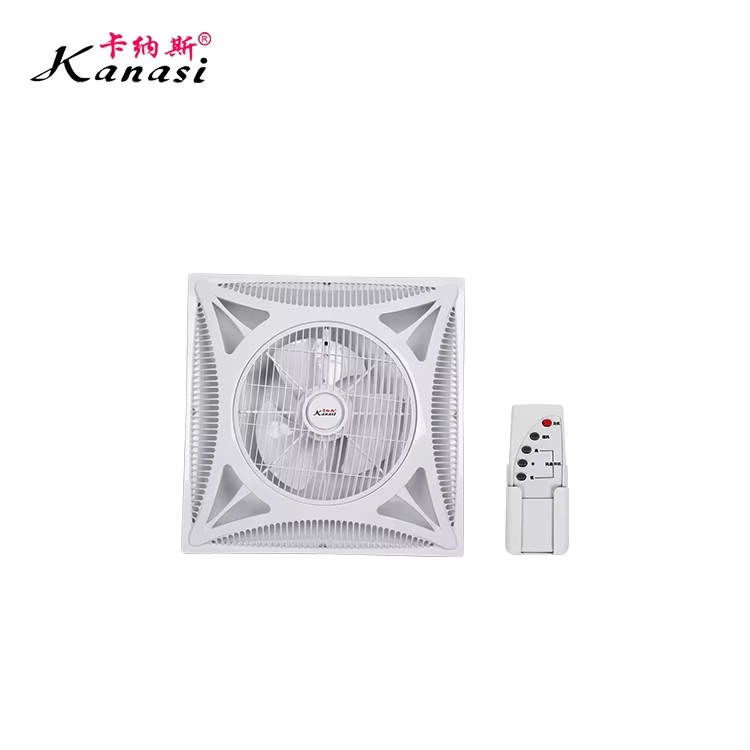
Remote Control Fans Make Day to Day Life Easier
Adjust from the Comfort of Your Chair
Adjusting a product's fan speed, changing light settings, and controlling air flow to either up or down can be done by the user all without physically leaving a spot and using a remote control fan. No more getting up to adjust a wall control. This is especially useful for multi-leveled homes and for people who are just getting over the illness. It is also useful for those carrying groceries, tending to children, or having to get up multiple times to serve food or help children. This is also a useful feature for the elderly and those who struggle to adjust to effort. It is no surprise that families with remote control fans use them around 27% more often than families with the older control types. With the privilege of ease, the chore of continuous usage of a fan has become a norm, instead of a task.
Four Wireless Technologies: IR, RF, Wi-Fi and Bluetooth
Remote control fans use various wireless technologies depending on their function and installation location. Infrared remote controls are old-fashioned, but they are inexpensive and easy to use. However, they do require a direct line of sight. Radio frequency technology, on the other hand, works better. It is able to transmit signals through walls and provides a range of about 50 feet. It works reliably, even when the internet is down, and will continue to function. Modern smart home fans use Wi-Fi and Bluetooth to integrate with devices like Google Assistant and Apple HomeKit. Customers appreciate talking to their fans, using their phones to change settings or scheduling controls, and pre-cooling their homes when they are on their way back. The best part about these smart home fans is that they can be installed in a variety of buildings because they do not require complicated wiring like traditional systems do.
Energy Efficiency: Less Dependence on HVAC with Precision Fan Control
Fans that are remotely controlled as HVAC complements by positively improving air flow in a controlled and strategic manner sense air movement and adjust to improve comfort in the space through use of evaporative cooling and thermal mixing and allows for a higher set point on the thermostat without loss of comfort.
ASHRAE Supported Savings: Less than 40% AC Runtime with Proper Airflow
ASHRAE has shared that designers of the building heating and cooling systems have an interesting finding that when air movement is done in a certain way, there is a reduction of 40% in air conditioners- a significant finding for heating duct designers. Remote controlled smart fans adjust to the right conditions of air flow for the people in the room. Participants in the study reported they were sacomfortable when the temperature was set to a 4 degree AC decrease. The combination of smart fan use and reduction of AC use is significant especially in summer months.
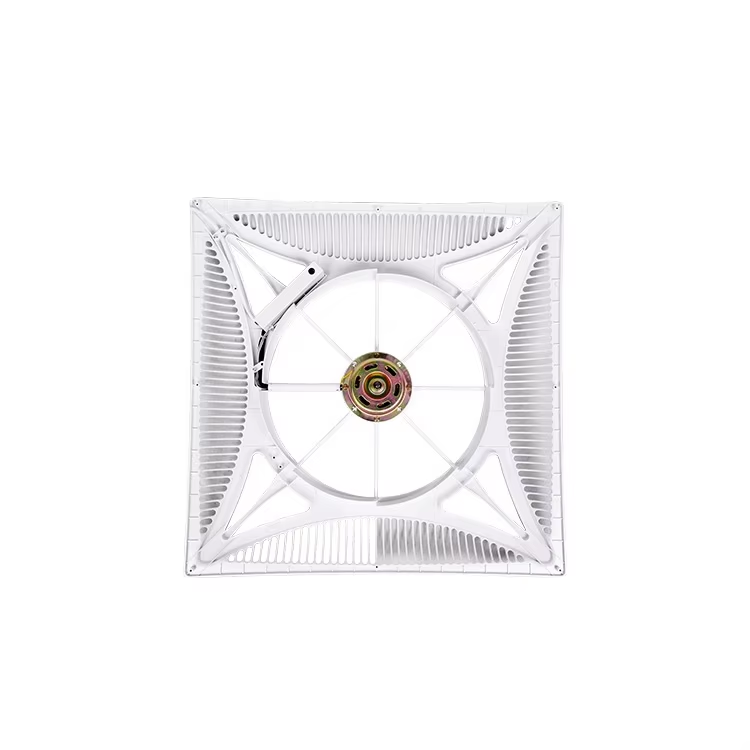
Integration of Reversible Motors and Thermostat Technology for Year-Round Optimization
The technology behind reversible motor fans means they can operate in either direction to maximise space cooling or warmth. Air is driven upward in summer to aid the cooling of the space. In winter months, the direction of airflow is reversed and warm air trapped at the ceiling is pulled down and distributed to the living areas. The integration of fans with smart thermostats achieves greater optimisation. The smart thermostat will engage the fans just prior to the activation of the main heating unit so there is no waiting for the temperature to fall to activate the heating unit. Industry reports indicate that properly optimised fans and smart thermostats can achieve a reduction in heating and cooling operational expenditure of up to 75% in average climates. This is possible as fans only consume 2% of the power that central air conditioning systems consume, and as such, deliver a highly efficient solution to the everyday comfort challenge.
Making Your Smart Home Easy
Compatible with Apple HomeKit, Alexa, and Google Assistant
Modern remote controls offer real-time interactions across all major smart home platforms, including Google Assistant, Alexa, and Apple HomeKit. Users can provide voice commands to adjust fan speeds, turn lights on and off, and reverse airflow. They can do all this without leaving the dinner preparation, finishing up after work, or dealing with the kids at home. It's also a nice feature to control settings and parameters from a single hub instead of a bunch of different apps from different manufacturers. This makes daily life easier and ensures functionality throughout the devices, including the newer devices, for years to come. For the more security-conscious consumers, Apple devices offer more security features, and HomeKit's data protection, including full encryption, secure Home Key access, and authentication, makes unauthorized access protection a priority.
Automated routines such as scheduling, geofencing, and climate adaptive triggers turns a standard fan into a smart climate controller. When a fan is geofenced and a users phone is within a certain range of a geofenced home, the fan turns on. Sleep mode is a feature that runs at a set speed and is intended to not disrupt users during sleep. Adaptive triggers tied to a thermostat allows the fan to run at a higher speed when the temperature exceeds a user-defined threshold. Researchers estimate intelligent control features reduce the duty cycle of an HVAC system by 8 to 12%. This saves energy by eliminating the unwanted cooling of a space while still providing needed air circulation.
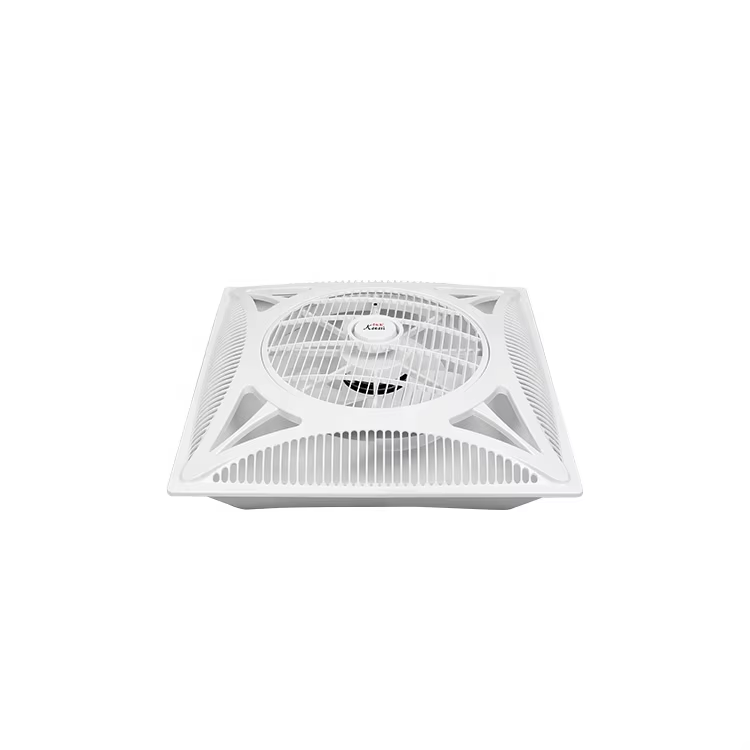
Remotely controlled fans also benefit with inclusive design by using automation and flexibly to control the environment. In the case of users with reduced mobility and/or dexterity, control can be given to any user to change the airflow, lighting, and position of the fan from a seated position. This also minimizes reliance on care staff.
Household safety is improved with cordless operation. No more climbing on furniture to reach pull chains and no more dangling cords that can cause child or elder entanglements or trip hazards. Models that are voice-activated provide even more safety. They allow for an immediate and hands-free approach to respond to spills, falls, or if someone is momentarily restricted from moving.
These designs display universal principles of design. Spaces are made where everyone can use the technology. With the purchase of remote control fans, households are prioritizing safety, accessibility, and comfort.
FAQ
1. In what ways do remote control fans make life easier?
Users can control fan speeds, the brightness of the fan lights, and the direction the fan blows air from the comfort of their chair. This saves work and makes their lives easier.
2. What wireless technologies are remote control fans equipped with?
Remote control fans with IR, RF, and Bluetooth can easily become part of smart home technology.
3. In what ways do remote control fans increase energy efficiency?
They enable homeowners to save energy and use their air conditioning less because they can set the thermostat at a higher temperature and they will rely on their heating/cooling system less.4. Is it possible to incorporate remote control fans into smart home systems?
Yes, remote control fans work with voice commands and automated routines through smart home systems like Alexa, Google Assist, and Apple HomeKit, providing added convenience.
5. Do remote control fans benefit people with mobility issues?
Yes, remote control fans benefit individuals with limited mobility by making it easier and safer to control temperature and lighting in their environment.